
We incorporate over 25 years of in-depth segmentation analytics and project experience to give you the best solutions possible and an ability to efficiently tag them into your existing databases


We advise on survey design and optimal measures to ensure accurate solutions and avoid common segmentation errors.

We have extensive experience in international segmentation, guiding the best approach, testing, and adjustments for cultural differences.

Decades of experience have refined our process to deliver the best outcomes and avoid common segmentation pitfalls.

We evaluate multiple distance metrics and random starting points for each segment count, selecting the few solutions that are most stable.

We let you guide segments to reflect key opportunity variables without requiring them to be direct differentiators.

We prevent unreliable solutions by guarding against ‘lone wolf’ segments that differ on only one or a few inputs.

We guard against 11 common segmentation pitfalls, drawing on over 25 years of experience.

The Lookalike process identifies segments with similar attitudes but greater differences in transactional, behavioral, or demographic factors for targeted classification.

We use predictive analysis to ensure accurate typing of future respondents with a minimal set of questions.

We offer interactive tables and visual tools—difference tables, top differentiator sorting, perceptual maps, and radar charts—to quickly explore and understand segments.


Spark ideas, understand motivations, differentiation, ideate new features and reasons to believe, and uncover key brand image dynamics.
In general segmentation analysis allows your client to split the market into groups who have different sets of needs, attitudes, triggers and context out of which they derive value for your clients’ products and services. Dividing the marketplace and sizing the opportunity in each area or segment allows for customized product development or communication to raise overall penetration, sales and profits.
Confidence: Segmentation is a process of “art and science”. Our process applies the art much more into the science and method, offering more confidence in the process.
Insight: More insightful differences. We fulfil the promise of finding that key small set of inputs that unlock broader differentiation among more key inputs in a meaningful way.
Avoiding Segmentation Failure: We avoid a lack of meaningful differentiation, and our segments usually differ from each other 2x more than typical solutions
Avoiding Typing Failure: our process ensures successful 90%+ classification with 12 typing inputs or less.
Easy to use Typing Tools: Tools allow for individual typing and batch typing, with instructions on how to apply the formulas in other contexts.
Extend Practical Applications: Use the Lookalike Data Fusion to assign segment memberships in other databases.
Combining various forms of K-means clustering with predictive classification, in an iterative process of searching for the best solutions with specific important constraints
An advanced form of retaining the most important insights from a base attitudinal segmentation while finding nascent links into other datasets or types using an iterative optimization process.
The following deliverables are designed to provide actionable insights and decision-making support through a combination of analytical tools, visualizations, and interactive features
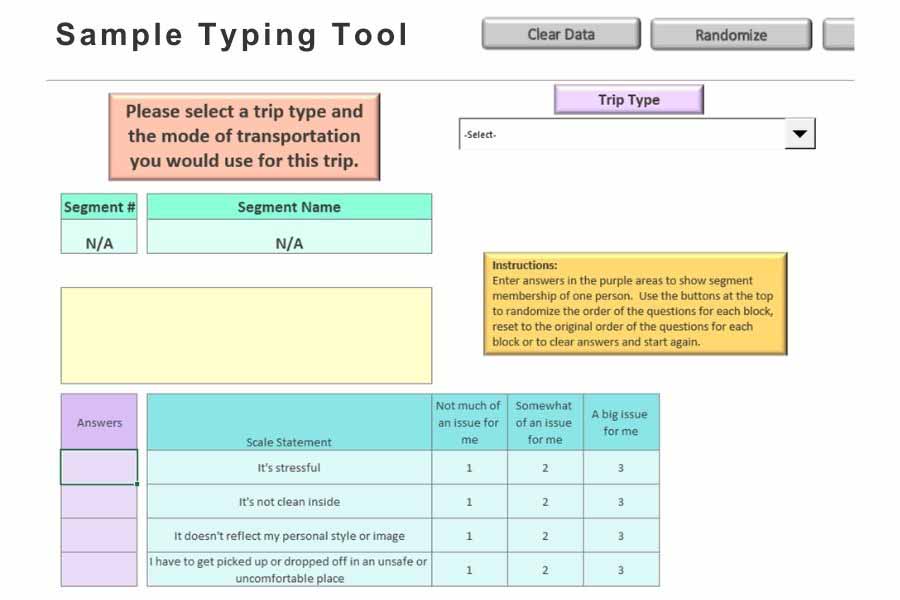
Want to see this with your data? Request a demo and we’ll run a short mapping and show a live simulation.
When it comes to advanced segmentation, few teams combine research expertise, technical mastery, and practical insight like we do. Here’s why our approach delivers unmatched results:
Your segmentation questions, answered — timelines, data needs, and solution guidance made simple.
Yes. We may need to structure the sample differently for the main segmentation to include respondents from a database if we plan to use that database for new differentiators or predictors.
Every couple of months, receive insightful blog entries that use case studies, examples and demonstrations to show you how to get the most out of your advanced analytics and to see dangers you can avoid. This is a new series of posts that come directly from real experience happening right now!


