
Driver Maps help you understand how different drivers influence each other and impact results. They visually show the relationships between drivers so you can see which ones matter most and how they work together. With interactive Driver Maps, you can focus on specific questions and adjust the view to match your goals. The Driver Map Simulator allows you to explore different paths of influence and identify the most effective combinations of drivers. This helps you make smarter decisions by focusing your efforts where they will create the greatest impact.
Traditional bivariate analyses (e.g., correlations or simple regressions) are a helpful starting point but fail to capture interactions between drivers, limiting insight and accuracy.
In your client service Driver Maps are one of the best ways to deepen your client relationships by offering added value and insights.
Differentiate Driver Maps’ outreach by showcasing what makes you unique, sparking interest, and adding clear value to every interaction and proposal.
Driver Maps are a natural upsell for clients familiar with driver analyses, offering a clear path to deeper insights and an elevated approach to driver work.
Driver Maps are analytical tools used to understand relationships among variables. They can be built using different levels of analysis, depending on the goal of the study.
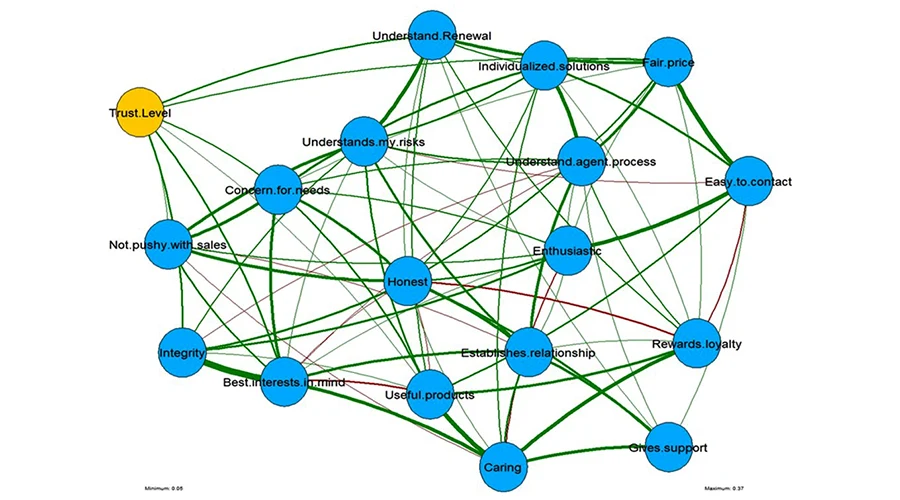
These driver maps look at every 2-way correlation and construct a visual map that represents the relationships and clusters of highly associated drivers.

Driver Maps are like a more exploratory version of structural equation modeling (SEM). SEM is confirmatory in nature and which means you need to have a strong incoming hypothesis of the structure of the map and relationships between the inputs. You then can refine and test this structure versus others you have in mind. Driver Maps allow the data to tell us the structure. They overlap in many, but not all, applications. Often when a client asks about SEM, they would benefit more from Driver Maps.
Driver Maps are analytical tools used to understand relationships among variables. They can be built using different levels of analysis, depending on the goal of the study.
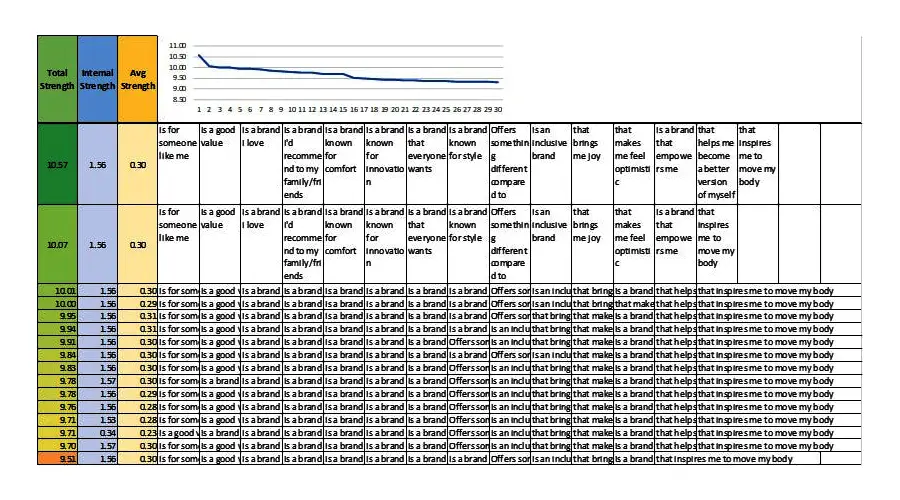
1. Driver Analysis: Interact with the driver value table to choose a DV and explore its direct and indirect drivers, with multi-level maps for multiple measures.
2. Path Optimization: Search for the optimal sequence of drivers, including functional and emotional paths to purchase.
3. Key Driver Groups: IIdentify influential driver groups whose combined impact and interconnections reveal insights into consumer behavior and guide communication strategies.
Want to see this with your data? Request a demo and we’ll run a short mapping and show a live simulation.
With over 5 years of hands-on experience using Driver Maps, our Analytics Team knows these tools inside and out. We’ve tested multiple approaches and understand what works best. As one of the pioneers in applying these innovative market research tools, we’re your trusted partner for uncovering insights and crafting solutions that truly impact your business.
Mapping Made Simple – Costs That Scale With Your Needs.
But it all depends on the number of subgroups, map input sets, and the need for the simulator.
Your questions, answered — support, timelines, and project guidance made simple.
Overlaying performance with driver importance helps prioritize where to act. Drivers that are important but already performing well may need less attention, while important drivers with low performance require focus. Prioritization also depends on competitor performance—areas where competitors excel are high-priority threats, while areas where they lag may be opportunities. This approach informs both strategic and tactical decisions.
Driver Maps typically take a week to estimate, and if a simulator is part of the deliverable, it can be done in the same period.
Every couple of months, receive insightful blog entries that use case studies, examples and demonstrations to show you how to get the most out of your advanced analytics and to see dangers you can avoid. This is a new series of posts that come directly from real experience happening right now!


