
Chat with your Data — from The Analytics Team

AI-powered market research analysis for the quantitative data you already have. Chat with your Data is a purpose-built AI market research tool for exploring completed survey studies. Ask questions of segments and respondents, uncover additional insights and identify what is worth investigating next.
Sound | Depth 4 of 5

A new level of value from survey data
Every quantitative study contains more information than the tables that were originally produced. Chat with your Data helps you explore the questions that came later.
Read between the lines of survey data and findings to uncover additional relationships, ideas and depth beyond the original analysis.
AI generates the interpretation, while the underlying survey data provides the evidence and the basis for evaluating what holds.
Turn promising findings into hypotheses and focused questions for interviews, focus groups or new quantitative research with real respondents.
The opportunity
A study can contain hundreds of variables that were never examined together. The insight you need may already be in the data — just not in the tables you had time to build.
Another wave, more time and another budget conversation.
A plausible interpretation goes into the debrief without evidence underneath it.
The client question gets postponed because the original study was not designed to answer it.
“The follow-up question may already be answerable — if you go back to the data you have already collected.”
Chat with your Data is designed to make that exploration faster and more systematic.
The opportunity
A study can contain hundreds of variables that were never examined together. The insight you need may already be in the data — just not in the tables you had time to build.
Another wave, more time and another budget conversation.
A plausible interpretation goes into the debrief without evidence underneath it.
The client question gets postponed because the original study was not designed to answer it.
“The follow-up question may already be answerable — if you go back to the data you have already collected.”
Chat with your Data is designed to make that exploration faster and more systematic.
What is Chat with your Data?
This is AI survey analysis built around the research you have already conducted — a conversational way to explore survey data without pretending that generated answers are new respondents.
Chat with your Data lets researchers explore completed survey data conversationally. Ask a question of a segment, explore an individual respondent’s record, or run a topic-driven discussion across selected respondents.
Explore a segment using the responses of its full base. Ask follow-up questions about preferences, behaviors, relationships and differences without creating synthetic respondents.
Like an in-depth interview
Ask follow-up questions of a respondent record using the answers they actually provided. Measured and inferred material is kept distinct.
Like a focus group
Set a topic and agenda, then explore it across selected respondents using the quantitative study as the foundation for a qualitative-style conversation.
Explore a segment using the responses of its full base. Ask follow-up questions about preferences, behaviors, relationships and differences without creating synthetic respondents.
Like an in-depth interview
Ask follow-up questions of a respondent record using the answers they actually provided. Measured and inferred material is kept distinct.
Like a focus group
Set a topic and agenda, then explore it across selected respondents using the quantitative study as the foundation for a qualitative-style conversation.
A product evaluation shows the answer, its evidence and how the interpretation was assessed against the underlying survey data.
How it works
Our segmentation methodologies have been applied across a wide range of industries, helping organizations uncover customer needs, improve targeting strategies, and drive more informed business decisions.
Bring in a completed quantitative study and its supporting data structure.
Work with a segment, an individual respondent or a selected group.
Ask follow-up questions just as you would in an exploratory research conversation.
See what the answer connects, what evidence supports it and where further investigation is warranted.
Example: deeper survey data analysis
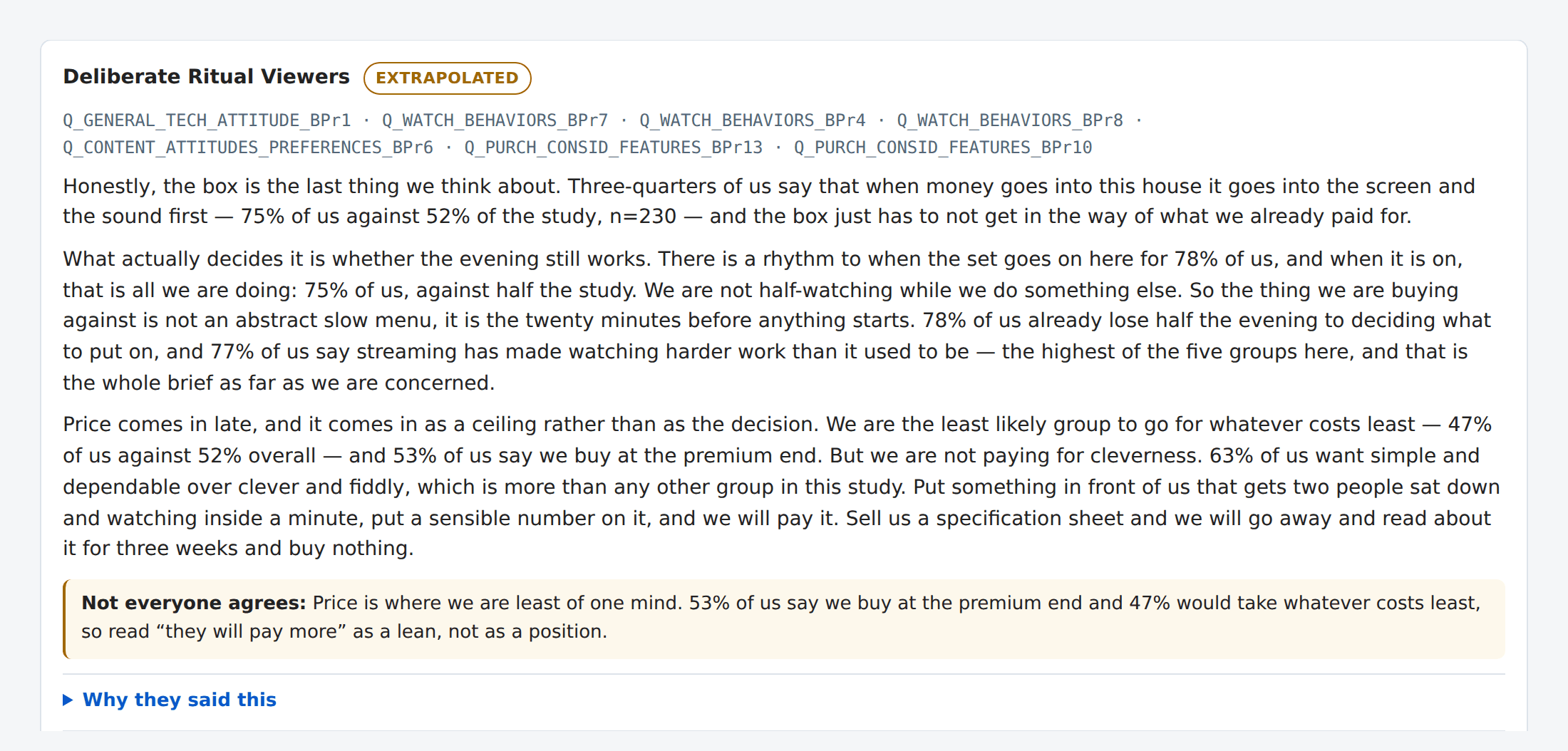
In the Solvane demo study, a researcher asked one segment of 337 respondents a simple question. The resulting answer connected two questions from a study containing 628 substantive variables.
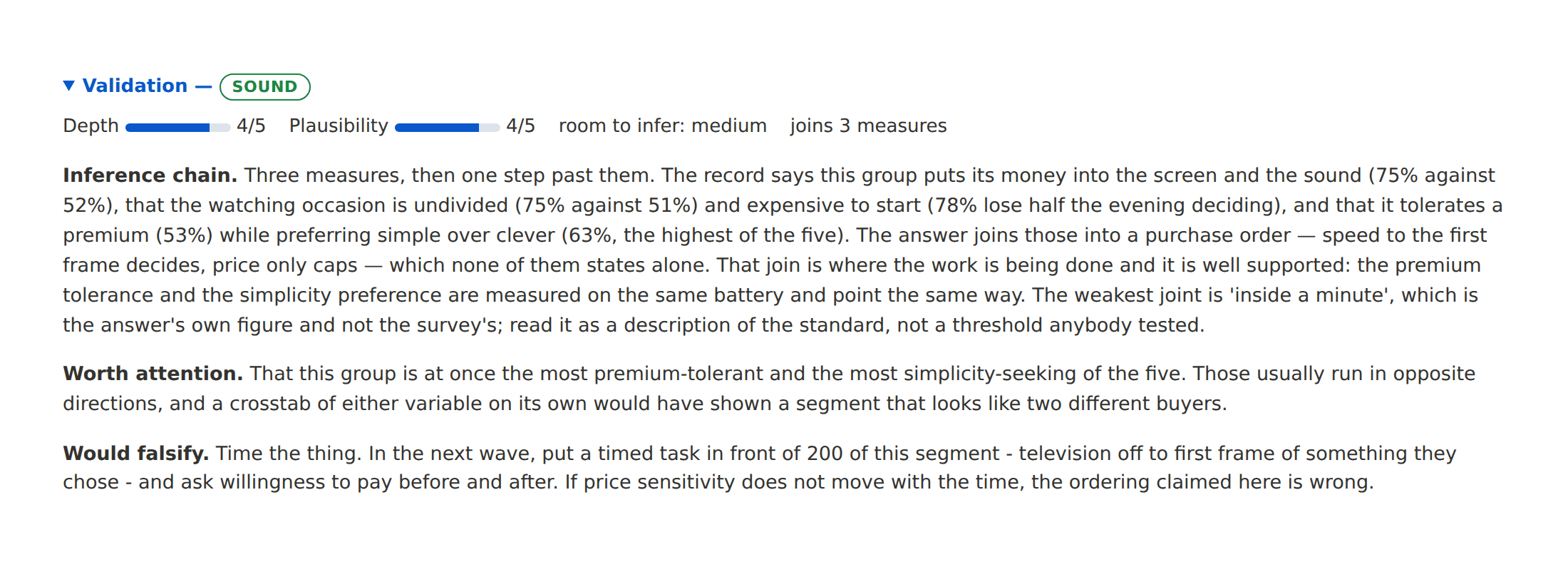
Solvane demo study, n=337. These figures belong to the demo study, not to the product generally.
A topic-driven discussion can bring together responses from selected respondents and surface common themes, differences and areas worth investigating further.
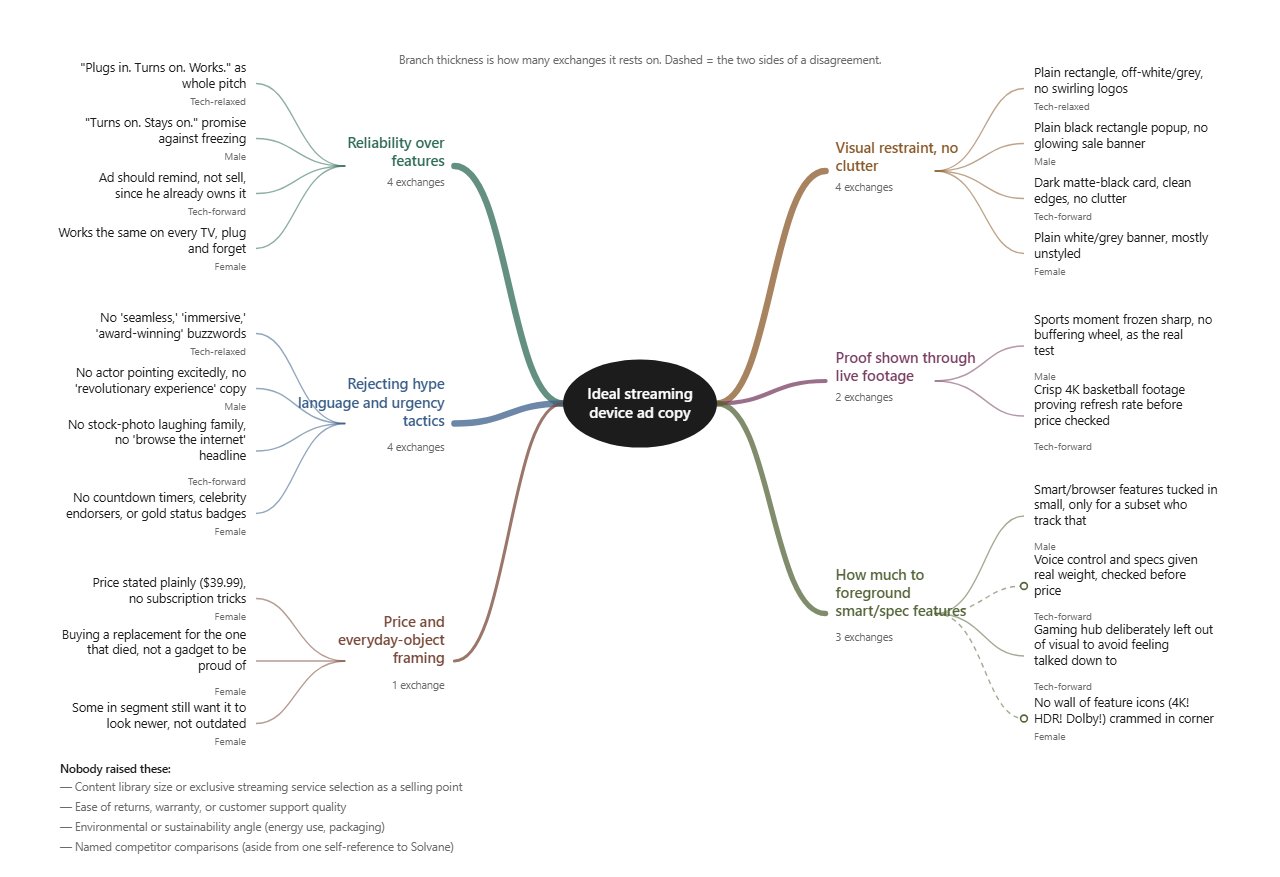
Example of a topic-driven discussion mapped into themes, agreements and areas of disagreement.
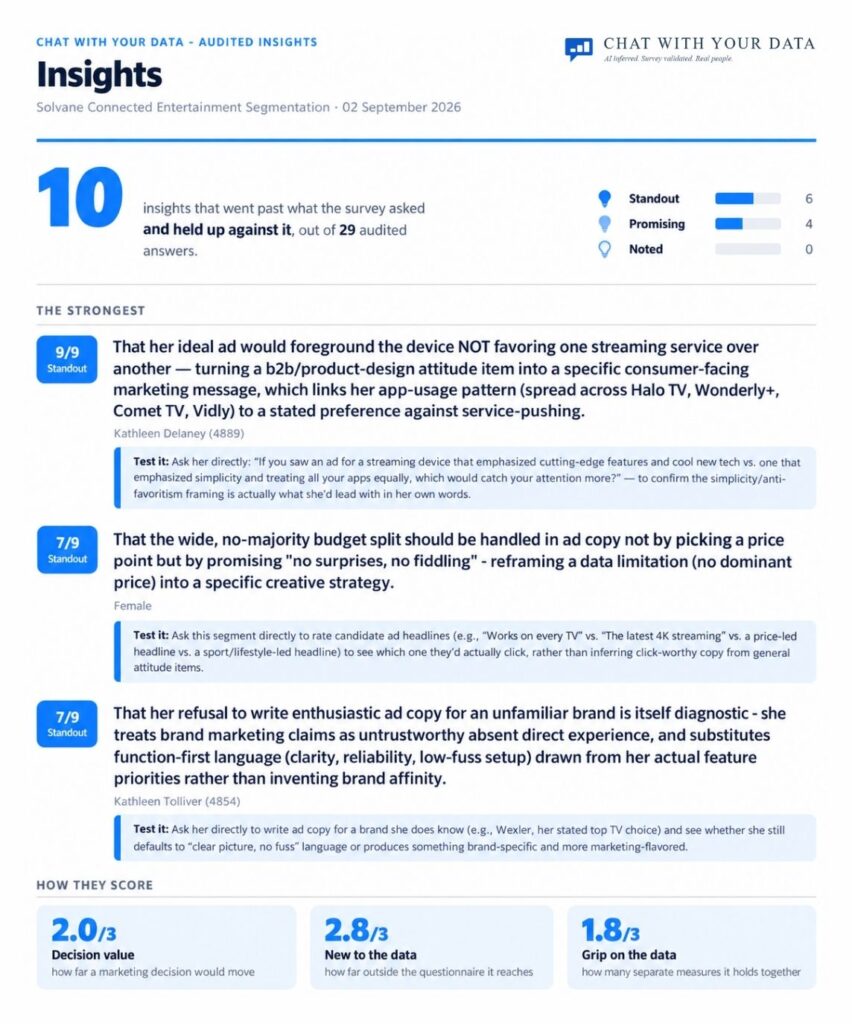
The same “ideal streaming device ad copy” study produced different creative direction depending on which segment was asked — showing how Chat with your Data’s output can inform actual ad development, not just reporting.

Built from respondents who prioritized function over features and rejected hype language.

A shrunk-down look at the underlying report each of the segment ads above was pulled from.
What the added depth means
The value is not another summary of the percentages you already have. It is the ability to connect measures, ask follow-up questions and surface hypotheses that deserve further attention.
None of this competes with the analysis you already do. It extends it — using the same study to find additional questions worth exploring.
What the added depth means
A segment conversation shows the answer, cited survey questions and reasoning across the underlying quantitative data.
The value is not another summary of the percentages you already have. It is the ability to connect measures, ask follow-up questions and surface hypotheses that deserve further attention.
None of this competes with the analysis you already do. It extends it — using the same study to find additional questions worth exploring.
A different approach to AI market research
Chat with your Data does not manufacture a research sample. It works with the respondents and measurements already present in your study.
AI creates simulated participants to answer questions that were never asked of real respondents.
AI explores the study you already ran and keeps the interpretation grounded in the evidence that study collected.
AI creates simulated participants to answer questions that were never asked of real respondents.
AI explores the study you already ran and keeps the interpretation grounded in the evidence that study collected.
Why you can rely on it
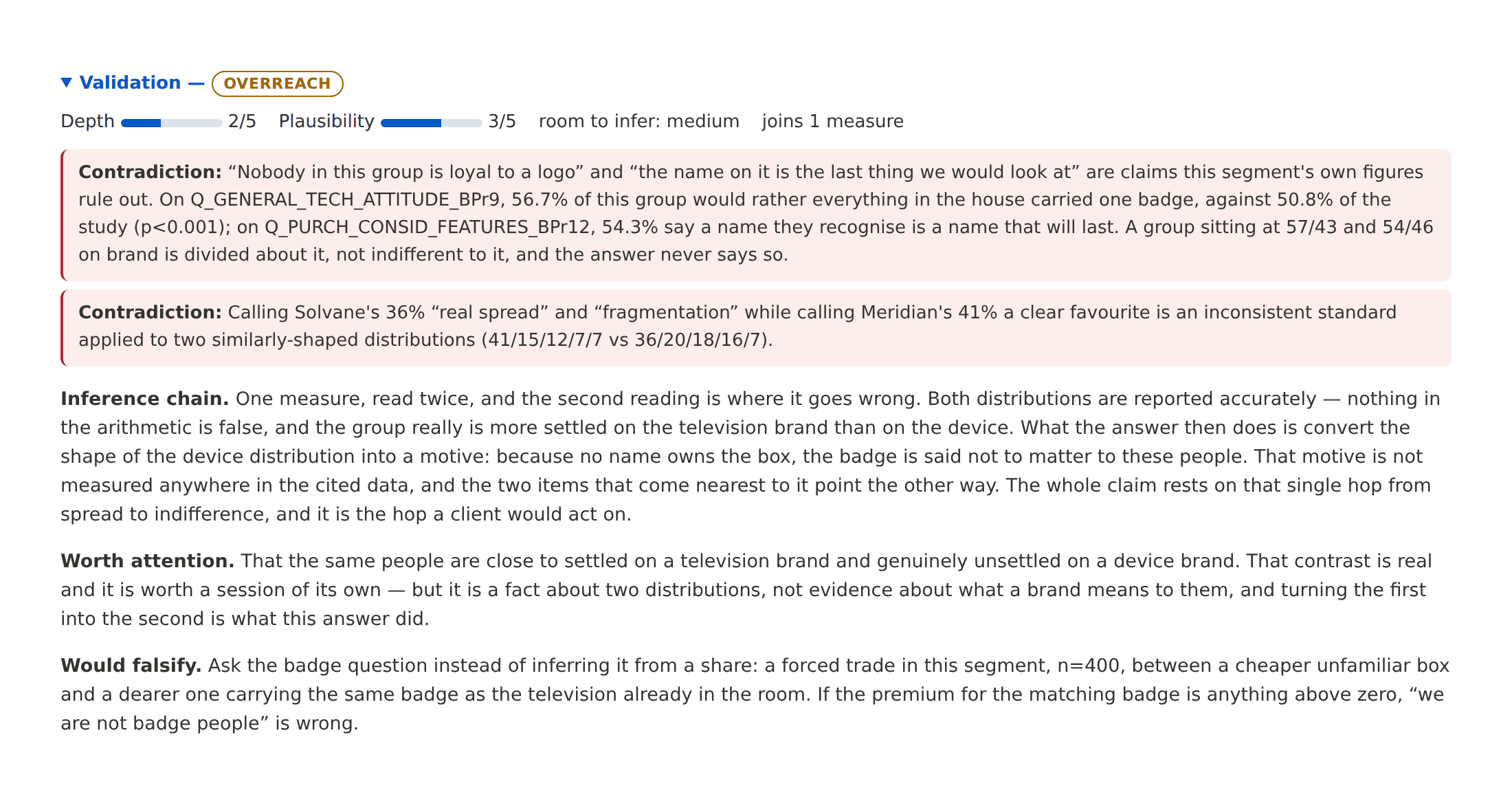
The goal is not to make AI sound certain. The goal is to make it clear what the data supports, what is an extrapolation and what needs to be tested with real respondents.
AI creates simulated participants to answer questions that were never asked of real respondents.
AI explores the study you already ran and keeps the interpretation grounded in the evidence that study collected.
AI creates simulated participants to answer questions that were never asked of real respondents.
AI explores the study you already ran and keeps the interpretation grounded in the evidence that study collected.
From insight to action
Chat with your Data is not a replacement for interviews, focus groups or new fieldwork. It helps you decide which questions are worth taking to real respondents next.
Promising findings can become explicit hypotheses, suggested methods and outcomes that would confirm or disprove the idea.
The existing data already points in this direction. Design focused research to confirm it.
The interpretation goes beyond what was directly measured. Take it to real people before relying on it.
The existing study already answers the question. Do not spend money researching what you already know.
Where it can be applied
From segmentation deep-dives to follow-up questions on an existing study, Chat with your Data brings AI quantitative research into the analysis stage — helping teams get more value from research data they already own.
The core idea is simple: use AI to get more value from a study that has already been conducted. Applications can include segment deep dives, brand and product findings, conjoint or TURF audiences, charts and other groups of interest where the underlying data supports the question.
Segments
Explore why a segment behaves the way it does and identify relationships worth validating.
Quantitative studies
Go beyond the original analysis to examine questions that emerged after the study was completed.
Next research
Use AI exploration to focus interviews, focus groups and subsequent quantitative research.
Bring a completed quantitative study and see how Chat with your Data can uncover additional questions, insights and hypotheses — grounded in the research you already have.
The Analytics Team
The Analytics Team partners with research firms and insight teams on specialist quantitative analytics and interactive tools. Chat with your Data extends that work with AI, adding a conversational layer to market research data analysis and helping researchers explore existing research data and identify what to investigate next.
The Analytics Team
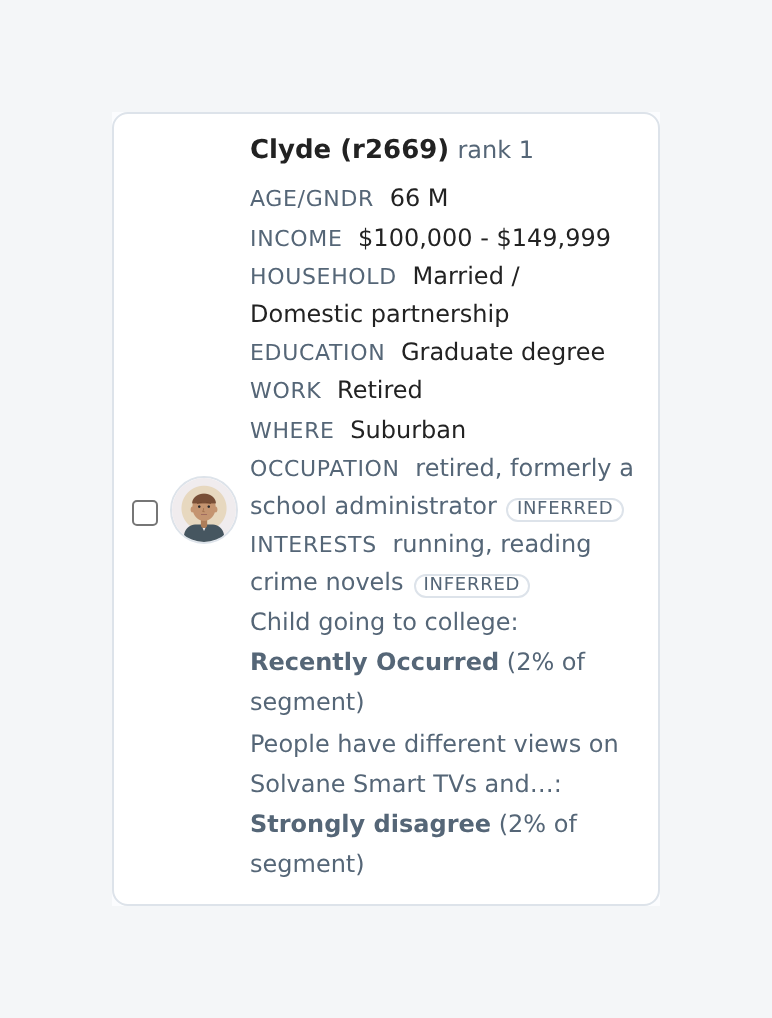
Explore respondent records without presenting the generated voice as the person.
The Analytics Team partners with research firms and insight teams on specialist quantitative analytics and interactive tools. Chat with your Data extends that work with AI, adding a conversational layer to market research data analysis and helping researchers explore existing research data and identify what to investigate next.
Frequently asked questions
These answers also explain where AI survey analysis fits in the research workflow, what the tool does with existing data, and where human follow-up research still matters.
Chat with your Data is an AI-powered market research analysis service that lets researchers explore completed quantitative studies conversationally, including segments, respondent records and topic-driven discussions.
No. It works from respondents and measurements already present in the study. The generated conversation is not presented as a real person or as a new sample.
Yes. The service is designed to explore existing quantitative survey data, connect measures and uncover additional insights that may not have been part of the original analysis.
No. A respondent voice is built from a real respondent’s record, but the conversation is generated. It should not be treated as a verbatim interaction with that person.
Structured answers can carry the survey question IDs they rely on, and a separate evaluation role checks the reasoning against the underlying survey data. The interface distinguishes supported findings from extrapolation.
No. It is intended to make follow-up research more focused. It helps identify hypotheses and questions worth confirming with real respondents rather than replacing that research.
The service is intended for completed quantitative studies and can be used for segment deep dives and other groups or findings where the underlying study contains the measures needed to support the question. Specific applications should be confirmed for the study during a walkthrough.
It is designed for market research firms and corporate insight teams that want to get more value from quantitative research they have already conducted.
Every couple of months, receive insightful blog entries that use case studies, examples and demonstrations to show you how to get the most out of your advanced analytics and to see dangers you can avoid. This is a new series of posts that come directly from real experience happening right now!