
How to Analyze Brand Positioning Data: A Practical Guide to Brand Perception and Competitive Positioning Research
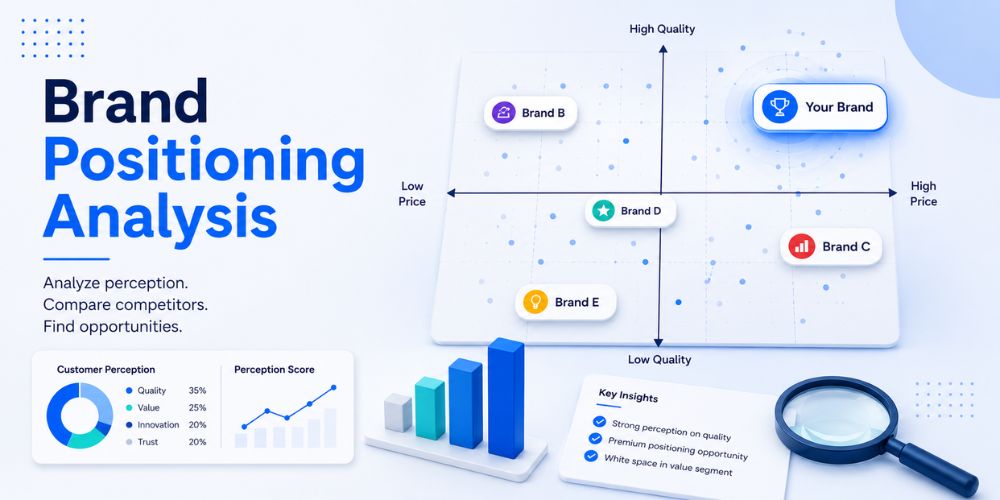
Every business wants customers to see its brand in a certain way. You may want your brand to be known for quality, value, innovation, or customer service. But your intended position is not the same as how customers see your brand. What matters is how they perceive it compared with competitors. Brand positioning analysis helps […]
What Is a Perceptual Map? Types, Uses, and Applications for Product Positioning
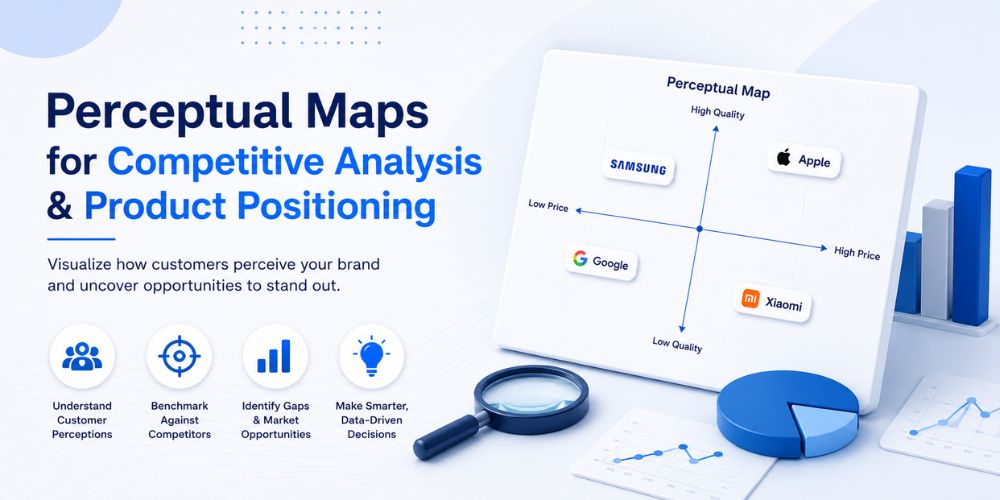
Companies often know who their competitors are, but they don’t always know how customers compare them. You may believe your product offers better quality or value, but if customers see it differently, your positioning strategy may not deliver the results you expect. This is where perceptual maps become valuable. A perceptual map helps researchers and […]
What Is Conjoint Analysis in Market Research and When Should You Actually Use It?
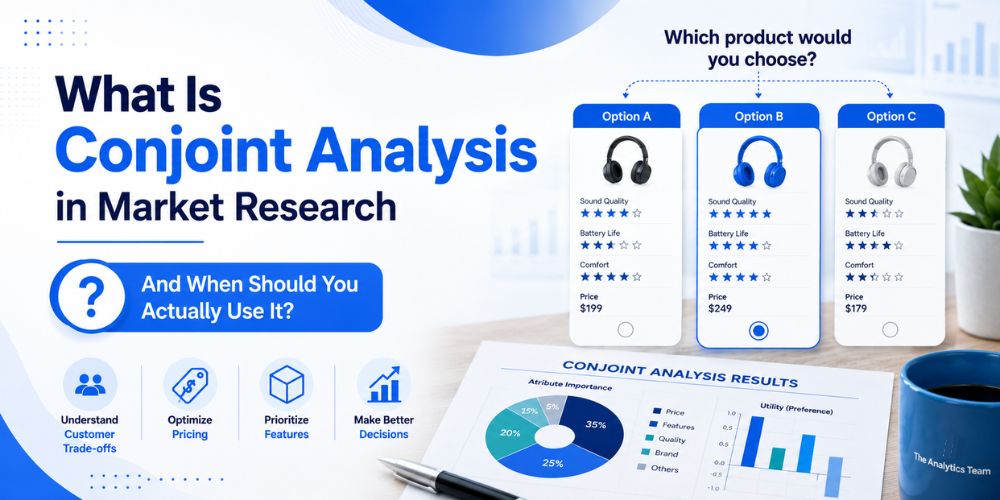
Choosing the right combination of product features, pricing, and positioning becomes difficult when customers value multiple things at once. Traditional surveys reveal what customers say is important but rarely capture the trade-offs they make when choosing between competing products. Conjoint analysis in market research solves this problem by measuring how customers evaluate different combinations of […]
How to Use Perceptual Maps for Competitive Positioning and Strategy
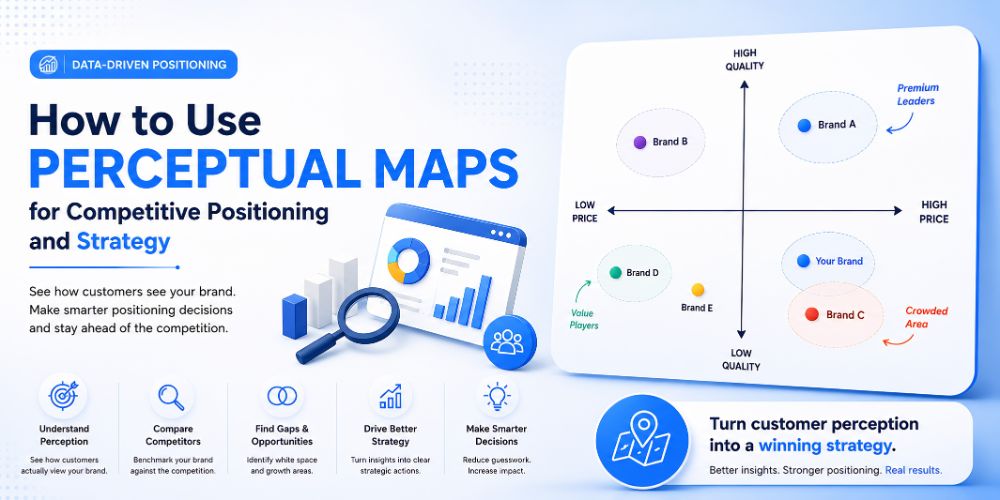
“We thought we were premium.” That short phrase alone has been brought up in multiple positioning discussions more than it really should have. After a team has done a thorough job in creating a brand identity, a lot of effort is spent on packaging, messaging, and pricing, and then a perceptual mapping study reveals the […]
How TURF Analysis Helps Companies Reach More Customers With Fewer Products

Many companies assume their best-selling products automatically create the strongest portfolio. In reality, product lines often compete against themselves without leadership realizing it. Two products may attract nearly the same buyers while entirely different customer segments remain underserved. The result is wasted shelf space, overlapping demand, and missed market reach. TURF analysis helps businesses identify […]
How to Design a Conjoint Study That Actually Reflects Customer Behavior

Most conjoint studies don’t fail because of bad methodology. They fail because they don’t reflect how people actually make decisions. On paper, the design looks solid—clean attributes, balanced levels, well-structured, and logically designed. But once results are applied in the real world, things don’t match. Products don’t perform as expected. Pricing misses the mark. Feature […]
Why Most Conjoint Studies Fail (And How to Get Actionable Results)

Conjoint analysis is one of the most potent instruments in market research. It can indicate the exact level of importance a customer assigns to a particular feature, how they balance the price-quality ratio, and the product configuration that will dominate the market. Nevertheless, teams regularly end up with results they are unable to utilize, findings […]
Growing your Business by Expanding your Capabilities and Capacity: Data Analytics Talent Strategy: In-House Team, Consultants, or Both?

Getting your analytics talent strategy wrong doesn’t just cost money. It slows decisions, weakens execution, and quietly erodes your competitive edge. Market Research firms or Corporate Insights teams know the risks can be especially high for the business and the people involved. Many top executives are struggling with this kind of decision in almost every […]
What?! Causal Drivers from Cross-Sectional Survey Data. How? (LiNGAM)
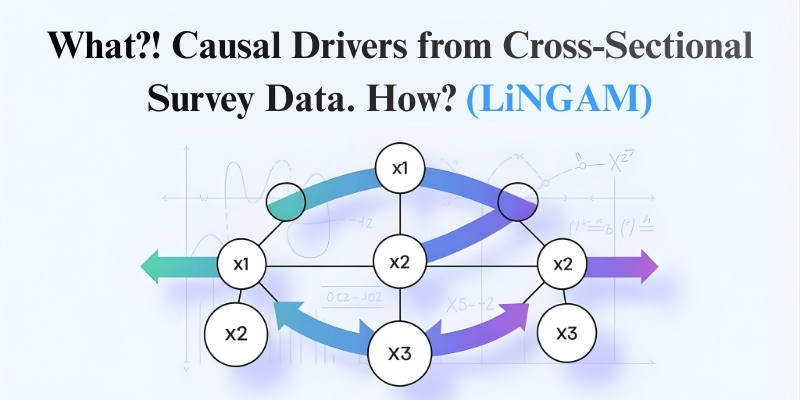
How often do we as researchers want to attribute causality to what we know is just correlational? It can be so easy to mix up correlation with causation! And in our industry we do driver analyses so often. The mix-up is easy: for example, ice cream sales and drownings both increase during summer, but it […]
Extending the Value of Attitudinal Segmentation Through Data Fusion and Lookalike Modeling

Most discussions around data fusion and lookalike modeling start with improving predictive accuracy—better features, better models, better performance. At AT, we approach the problem differently. Our work begins with attitudinal segmentation. These segments capture how people think, what motivates them, and why they behave the way they do. In practice, this type of segmentation delivers […]