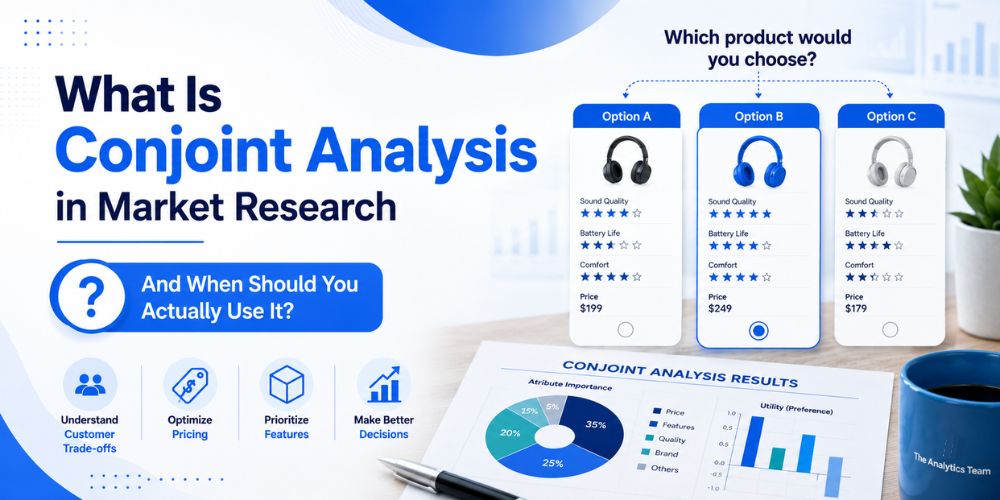
Choosing the right combination of product features, pricing, and positioning becomes difficult when customers value multiple things at once. Traditional surveys reveal what customers say is important but rarely capture the trade-offs they make when choosing between competing products.
Conjoint analysis in market research solves this problem by measuring how customers evaluate different combinations of features, prices, and benefits in realistic buying situations. It helps organizations make better product, pricing, and positioning decisions based on customer trade-offs rather than assumptions.
This guide explains what conjoint analysis is, when to use it, and how it helps market research teams make better business decisions.
What Is Conjoint Analysis in Market Research?
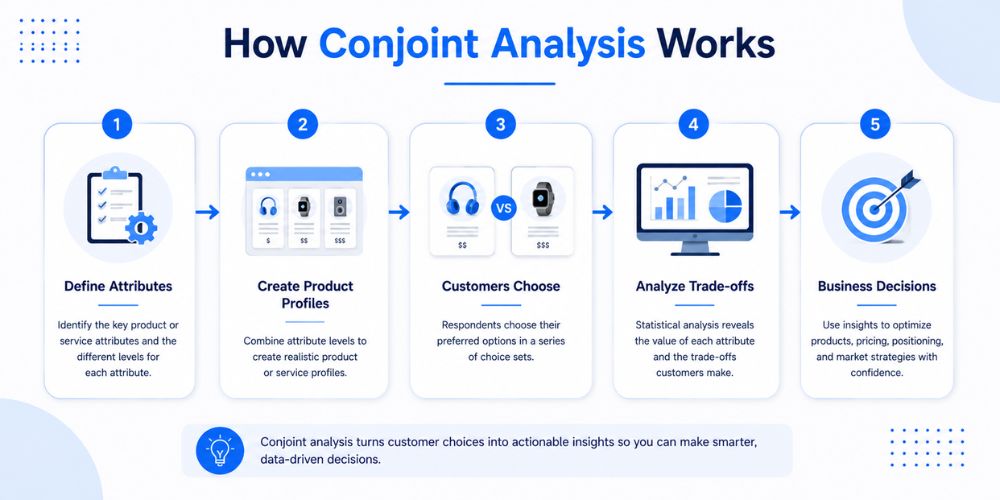
Conjoint analysis is a survey-based statistical technique that measures how customers value different product or service attributes. Instead of rating features individually, respondents choose between realistic product or service options that vary in price, functionality, brand, or other attributes.
Because respondents evaluate complete product profiles, conjoint analysis reflects how people make real purchasing decisions. It identifies which attributes matter most, estimates willingness to pay, and reveals the trade-offs customers are willing to make.
Why Conjoint Analysis Works
Customers rarely evaluate one feature at a time. They compare multiple attributes and make trade-offs based on price, quality, convenience, and other factors. Conjoint analysis recreates this process, revealing what customers are most likely to choose instead of what they simply say they prefer. The results can then be used to estimate willingness to pay, identify the most important features, and build market simulators for testing business decisions.
What Business Questions Can Conjoint Analysis Help You Answer?
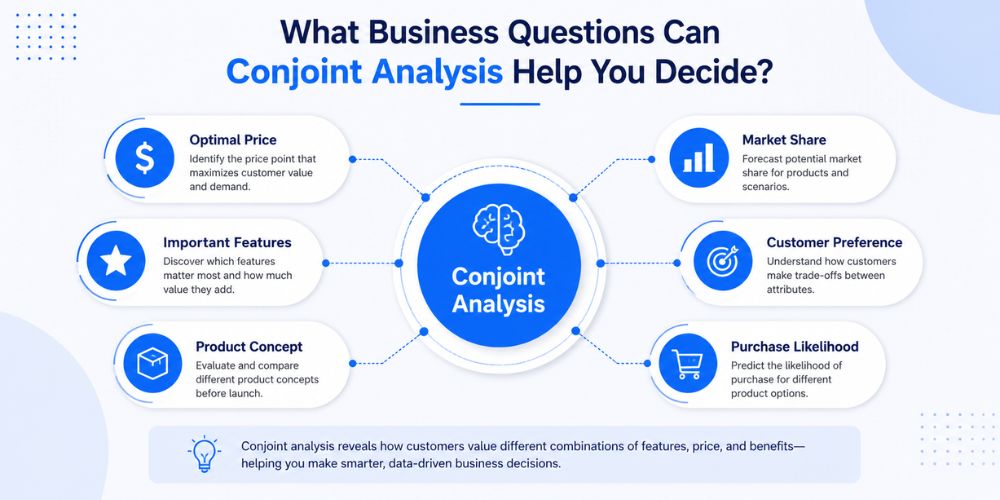
Conjoint analysis helps answer questions such as:
- Which product features matter most?
- How much are customers willing to pay?
- Which product concept should we launch?
- Which feature combinations create the greatest customer value?
- How would pricing changes affect demand?
- How might competitors influence customer choice?
Why Is Conjoint Analysis Important in Market Research?
Traditional surveys often make prioritization difficult because respondents rate many features as important. Conjoint analysis solves this by requiring customers to choose between realistic product options, revealing the trade-offs they actually make. This produces more reliable insights into customer preferences, willingness to pay, and product value, helping teams make better product, pricing, and positioning decisions.
When Should You Use Conjoint Analysis in Market Research?
Conjoint analysis is most valuable when your business decision involves multiple product or service attributes and there isn’t a clear answer. Instead of relying on assumptions or direct customer opinions, it measures the trade-offs customers make when choosing between realistic alternatives.
Consider using conjoint analysis when you need to:
- Determine the optimal price for a product or service
- Identify which features customers value most
- Compare different product concepts before launch
- Evaluate trade-offs between features, pricing, and benefits
- Forecast customer response using market simulations
- Make product development decisions based on customer preferences
If your goal is to understand how customers make choices between competing options, conjoint analysis is one of the most effective research methods available.
When Is Conjoint Analysis the Right Choice?
Conjoint analysis is powerful, but it isn’t the right methodology for every research objective. Choosing the appropriate analytical approach ensures you answer the right business question.
| Business Objective | Recommended Method |
| Optimize product features and pricing | Conjoint Analysis |
| Rank features, benefits, or messages | MaxDiff Analysis |
| Identify customer groups | Segmentation Analysis |
| Understand satisfaction or loyalty drivers | Driver Analysis |
| Maximize product portfolio reach | TURF Analysis |
Selecting the right methodology at the beginning of a project improves both research quality and business outcomes.
How Conjoint Analysis Supports Better Business Decisions
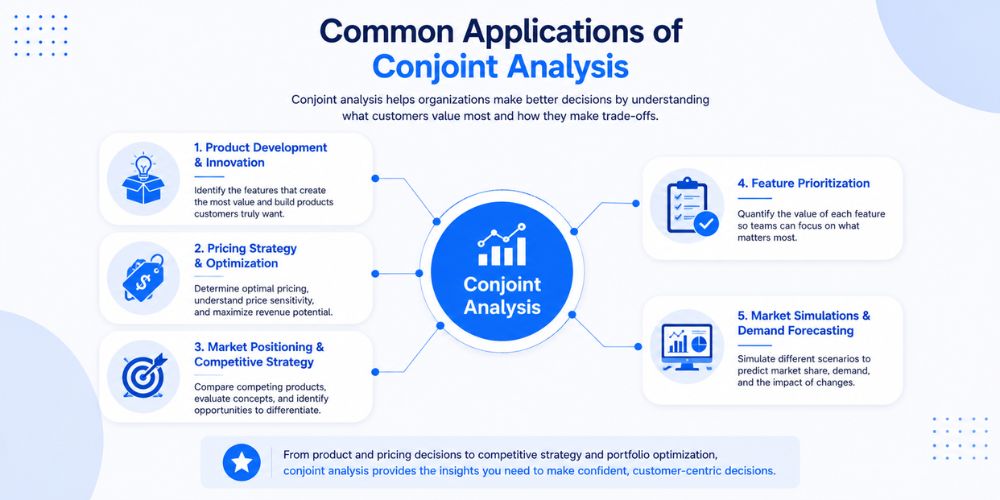
Conjoint analysis supports a wide range of business decisions, from product development and pricing to competitive positioning and market simulations. By measuring customer trade-offs, it helps organizations make decisions based on evidence rather than assumptions.
Product Development and Innovation
Developing new products often involves deciding which features to include and which to leave out. Conjoint analysis measures the value customers place on different feature combinations, helping teams focus on the features that create the greatest customer value while reducing unnecessary development costs.
Pricing Strategy and Price Optimization
Pricing is one of the most common uses of conjoint analysis. Instead of asking customers what they would pay, respondents evaluate realistic product options with different prices and features. This provides more reliable estimates of willingness to pay and helps organizations build pricing strategies based on actual customer preferences.
Market Positioning and Competitive Strategy
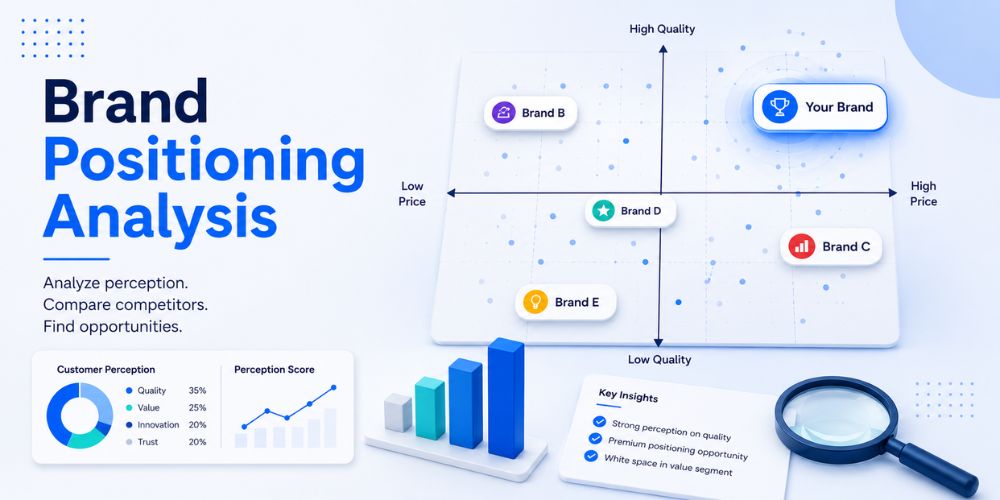
Conjoint analysis helps businesses understand how customers compare competing products and which attributes influence their choices. These insights can be used to strengthen competitive positioning, compare alternative product concepts, and identify opportunities for differentiation. Organizations often complement conjoint analysis with perceptual maps to visualize brand perceptions and better understand their competitive position in the market.
Feature Prioritization
Limited budgets and development resources make prioritization essential. Conjoint analysis quantifies the value of each feature, allowing teams to invest in the improvements that matter most to customers instead of treating every feature request equally.
Market Simulations and Demand Forecasting
Conjoint analysis can be used to build market simulators that predict how customers are likely to respond to different combinations of features, pricing, and competitive scenarios. Organizations can test product concepts, pricing changes, and competitor actions before investing time and resources, reducing risk and improving strategic decisions.
Common Mistakes That Reduce the Value of Conjoint Analysis
Most conjoint studies don’t fail because of the statistical analysis—they fail because of poor study design.
Many issues such as unclear objectives, poor attribute selection, unrealistic pricing levels, and respondent fatigue can significantly reduce the quality of the results. If you’d like a deeper look at these pitfalls, read our guide on why conjoint studies fail and how to get actionable results.
Unclear objectives, unrealistic attributes, weak pricing assumptions, respondent fatigue, and insufficient sample sizes can all reduce the quality of the insights. Investing time in designing the study correctly has a far greater impact than choosing a more sophisticated analytical model.
Some of the most common mistakes include:
Poorly Defined Attributes and Levels
Attributes should be clear and realistic and represent choices customers actually encounter. Vague descriptions create confusion and reduce data quality.
Including Too Many Attributes
Testing too many features overwhelms respondents and increases survey fatigue, leading to less reliable responses. Focus only on the attributes that are most relevant to the business decision.
Unrealistic Price Levels
Price ranges should reflect realistic market conditions. Prices that are significantly higher or lower than customers expect can distort willingness-to-pay estimates.
Insufficient Sample Size
Reliable conjoint analysis depends on adequate sample sizes. Small samples reduce statistical reliability and limit the ability to analyze meaningful customer segments.
Unclear Research Objectives
Perhaps the most serious mistake is starting the study without a clearly defined business question. Conjoint analysis is most effective when it is designed to support a specific product, pricing, or market decision rather than simply collecting customer opinions.
How The Analytics Team Helps Market Research Agencies
The Analytics Team partners with market research agencies and insights teams to provide advanced conjoint analysis expertise without replacing existing research capabilities. From study design and choice modeling to market simulators and result interpretation, we help transform complex survey data into clear, actionable recommendations that support product, pricing, and market strategy decisions.
When Conjoint Analysis May Not Be the Right Choice
Although conjoint analysis is one of the most effective methods for evaluating product and pricing decisions, it isn’t the right solution for every research objective.
If your goal is to understand a different type of business problem, another methodology may provide better insights.
| If your objective is to… | Consider using… |
| Rank features, benefits, or messages by importance | MaxDiff Analysis |
| Identify distinct customer groups | Segmentation Analysis |
| Understand what drives customer satisfaction or loyalty | Driver Analysis |
| Optimize product portfolios or maximize market reach | TURF Analysis |
| Measure trade-offs between features and pricing | Conjoint Analysis |
Selecting the right methodology at the start of a project improves both research quality and subsequent decisions. In many cases, these approaches complement one another rather than compete, providing a more complete understanding of customer behavior.
Make Better Market Research Decisions with Conjoint Analysis
Conjoint analysis is one of the most effective market research methodologies because it reflects how customers make real purchasing decisions. Whether you’re evaluating new product concepts, optimizing pricing, prioritizing features, or forecasting market response, it provides the insights needed to make more confident business decisions.
For market research agencies and insights teams looking to maximize the value of their research, partnering with experts in conjoint analysis consulting can help ensure studies are well designed, accurately interpreted, and translated into actionable business recommendations. The Analytics Team offers PhD level expertise in conjoint analysis for market research teams to help organizations turn complex survey data into confident, data-driven decisions.